Click to get a discount on OSHA training programs. Expires Soon!
8 Ways To Protect Workers From Summer Heat

8 Ways To Protect Workers From Summer Heat

Hot weather conditions are always harsh for workers. As per Osha, 50% to 70% of worker deaths due to heat-related illnesses are caused by an inability to adapt to a hotter environment. In addition, thousands of workers sustain heat-related health problems every year that can even lead to deaths. How to Keep Employees Safe in Summer In Summer construction workers are usually at a lot of risk from heat and according to OSHA regulations, this is what workers can do. 1. Gain Proper Training: Prevention is always found better than the cure in every case. The workers can get proper training beforehand on the symptoms of heat stroke. This way they can be prepared and take preventive measures even before the heat affects them. They can learn about the usual signs and symptoms their body may show before any heat-related illness including heat stroke and heat exhaustion. Moreover, they can learn about different preventive measures to counter these symptoms. 2. Stay Hydrated: One of the main reasons for getting a heat-related health issue is dehydration. When your body is deprived of water in extremely hot weather you can pass out. Therefore it is pertinent to keep your body hydrated even if you do not feel thirsty. Ask your employer to plant water coolers on the working site and keep on drinking water after a few minutes. If you do not have access to the water cooler try to bring your own water bottle and keep on drinking. In addition, you can have lemonade if you do not feel like having plain water in large quantities. Adding a little slice of lemon to your drink can give a refreshing taste. Try not to have caffeinated drinks as they can promote dehydration you can instead have electrolytic drinks. Make sure to have cold water and avoid room temperature water as cold water can help fight heat. 3. Have more Breaks During Long Shifts: Construction work requires a lot of energy and effort from the workers. Long shifts on hot days can exhaust every worker. The best way to battle exhaustion on long summer days is to take frequent and short breaks. Ask your employer to allow a quick break after every hour so that you can catch a breath and drink water. Utilize that break, and rest for a while. Make sure to rest under shade or in an air-conditioned room but avoid switching between hot and cold as it can have a negative effect on your health. Our bodies are not designed to sustain the sudden shifts in temperature so it’s better to take shorter breaks and rest in some shady areas. 4. Schedule your Work Hours Wisely: If you want to avoid the hottest hours of the day you will have to schedule your work hours wisely. Usually, construction working shifts are 7 to 8 hours long but the workload is not the same throughout the shift. To avoid heat stroke you can leave the heavy work for morning or evening hours as those hours are comparatively cooler. Try to do simple tasks that require less energy during the hot midday hours to avoid exhaustion and dehydration. In addition, you have to plan your indoor and outdoor work hours according to the time of the day. Try to finish your outdoor tasks early in the morning and get back inside as soon as the day gets hotter. Plus you can keep an eye on weather updates and plan your hardest tasks on the days when the weather is pleasant. 5. Choose Weather-Appropriate Clothes: The way you dress plays a very crucial role in the regulation of your body temperature. If you have to work in an extremely hot environment try dressing up in clothes that can beat the heat and keep your body cool. While dressing up for a hot day on your construction site keep these points in mind. Your attire should be comfortable Do not layer up and wear only one layer of clothing at a time Choose lightweight fabric Also, you can request your employer to allow you to wear loose clothing even on the construction site just for the hottest days of the year. 6. Protect your Head: Your head is one of the main parts of your body as your brain controls all other parts. You have to protect your head in hot weather so that your brain can function properly. Extremely hot environments can affect your brain and your body would not be able to regulate its temperature.  Therefore try to cover your head with a hard hat (if you are not wearing a helmet) so that the sun can not affect your head. Your working helmet itself protects you from heat so avoid removing it even if it makes you sweat as it is protecting your head. You can even carry an umbrella so that your beck and head remain protected. Plus, you can get cooling bandanas online and wear them while you are on a working site. 7. Watch What you Eat: Construction workers require more energy as their work requires them to stay outside most of the time. A good healthy meal can give you an energy surge but can you eat differently to avoid heat? Yes, you can. If you want to remain fresh and cool during your work hours try to avoid oily foods and heavy items as they can upset your stomach and can exhaust you in hot weather. Instead, you can eat a light vegetarian sandwich or a fruit so that you can feel lighter and happier even if you have to work on a hot day. 8. Watch out for Early Signs of Heat Stroke: If you want to avoid the severe effects of hot weather, be mindful of some early signs of heat stroke and exhaustion and try to ask for help if you notice any of the early signs. Report to your manager if you have one of the following signs without waiting

Read More
The Complete OSHA 10-Hour Training Guide (From Ex-Safety Manager)

The Complete OSHA 10-Hour Training Guide (From Ex-Safety Manager)

The 10-hour training program of the Occupational Safety and Health Administration (OSHA) is the basic training routine designed to improve the safety and health of workplaces.  This allows employees and members of staff an opportunity to obtain basic knowledge, hence assisting them to avoid accidents and exposure to hazards at the place of work. This makes health and safety training all more necessary since there are too many risks present in various industries. In many ways, health and safety training that works well safeguards both the employee and the economic issues brought about by incidents in the place of work. OSHA 10-Hour training is a critical part of instilling a safer, informed work environment by training the workforce on how to practice the approved modes and safety standards. Understanding OSHA 10-Hour Training Before learning to get the best benefit from the OSHA 10-Hour, it’s important to understand the purpose of this training and the individuals it is designed for. What is OSHA 10-Hour Training? The OSHA 10-Hour training program is a course from the Occupational Safety and Health Administration (OSHA). It targets new workers and gets to train them on some of the safety and health hazards that they will be able to encounter while on duty. It provides life-saving content over the duration of 10-Hours covering multiple topics like hazard recognition, avoidance, abatement, and prevention of workplace hazards. Objectives of OSHA 10-Hour Training The main objectives of OSHA 10-Hour training include the following: Awareness: Workshop focusing on enlightening the trainees on the work environment dangers and standards of the OSHA that are used in their workplace environment. Prevention: Teaching strategies and techniques that will be helpful in the prevention of job-related injuries or illnesses. Encourage the Culture of Safety: Encourage a safety-first mindset where safety takes preference over productivity. Who Should Take OSHA 10-Hour Training? OSHA 10-Hour training is recommended for: Entry-level workers: Recruits who will need a grounding in safety practice. Supervisors: Leaders who can benefit from safety basics to guide their teams.  Industry-specific workers: Namely construction, manufacturing, and warehouse workers in the firm where safety is tantamount. Such training will be relevant to the development of an informed workforce that contributes to a safer working environment through the understanding and management of the possible risks present at the site. Common Mistakes in OSHA Training One of the key aspects of OSHA training has to do with ensuring safety within the workplace.. There are many pitfalls that many hit when trying to enforce it. Understanding these mistakes in training is something that may make it possible for an organization to optimize its training programs, which helps them better protect its workforce and even choose better OSHA training providers if they plan to outsource this task to third-party providers.  Lack of Engagement Engagement is very important for any training program. Most training sessions that do not interest the participants end up being lost on the listeners. Traditional lecture formats that are information-based and without interactive discussion often lead to a disinterested audience that loses the retention of critical safety information. Lack of Practical Examples Examples provided need to be practical and relevant, so one should be able to apply them in real-life situations.. If not, the training sounds theoretical and not applicable, hence difficult for the workers to translate into real working conditions. Overlooking Industry-Specific Risks Each industry has its risks. General training that fails to cover the particular risks of a given sector can result in poor preparation on the part of the employees. Equally important is the training that takes in both the ordinary and the special risks emanating from the industry, whether it is construction, manufacturing, or healthcare. Incomplete Coverage of Required Topics OSHA training must be comprehensive. It should fairly cover the following 3 areas: emergency procedures, personal protective equipment, and new adherence regulations. Inadequate coverage in any of these areas can lead to non-adherence and even worse, undue accidents at the workplace. Addressing these top OSHA training mistakes by fostering engagement, utilizing practical examples, tailoring content to specific industries, and ensuring thorough coverage of all necessary topics can dramatically improve the effectiveness of OSHA programs.  Key Elements of a Successful Health and Safety Training Here are some essential elements that make OSHA 10-Hour training effective. Comprehensive Curriculum A good program in health and safety training will have a firm curriculum. It will include all the relevant safety standards and procedures, recognition of a hazard, response to emergencies, and techniques of risk assessment. It should ensure that it includes general safety principles and those applying to specific job-related hazards. This will foster comprehensive preparation that would help build a strong knowledge background. Moreover it will appropriately equip the employee to handle varied situations that are likely to be met during the job. Interactive Training Methods Interactive training methods greatly boost learning, as well as retention. These activities include group discussions, practicals, or scenario simulations to make learning more memorable through participant engagement. Interactive techniques, like role-playing a scene or setting up a virtual-reality exercise, create an experiential opportunity that may practically instill safety ideas. Regular Updates and Refresher Courses Changes in the field of workplace safety occur very often. The training program is usually updated periodically so that it captures the most relevant and effective curriculum. In addition, refresher courses over time help to cement the knowledge that the safety practices will not get outdated, hence the employees are up to date with those best practices and any legislative changes. Focusing on these key components can make robust and more effective training in health and safety; hence bringing about a secure workplace and a well-informed workforce. Steps to Ensure Effective OSHA 10-Hour Training Ensuring the effectiveness of OSHA 10-Hour involves careful planning and execution. Just in this respect, a matter of optimization of organizational safety training programs relates to the following steps: Assessing Workplace Specific Needs It is very important to examine the specific needs of the workplace before starting any training. This captures

Read More
Explore The Different Aspects Of OSHA 10-Hour & OSHA 30-Hour Courses

Explore The Different Aspects Of OSHA 10-Hour & OSHA 30-Hour Courses

Worker safety is paramount in the construction industry, given its alarming statistics of fatalities and nonfatal incidents. Construction alone accounts for a staggering 21% of all deaths among US workers in 2021. Additionally, there were 2.61 million nonfatal workplace safety incidents reported in the same year, encompassing slips, trips, falls, illnesses, and other injuries. Although this number represents a slight decrease of 1.8% from the previous year, it still underscores the pressing need for stringent safety measures. OSHA’s Outreach Training Programs for Addressing Workplace Safety Concerns In response to these concerning rates of risks and injuries, the US Department of Labor’s Occupational Safety and Health Administration (OSHA) has implemented a comprehensive training program tailored for employees in specific fields with one million employees attending these courses every year. The Outreach Training Program comprises two categories: the 10-hour and 30-hour courses, aimed at educating workers on workplace safety and health measures. Despite their shared focus on health and safety, many individuals remain perplexed by the distinction between OSHA 10-Hour and 30-hour courses. Essential Components of OSHA 10-Hour Training The OSHA 10-hour training primarily targets entry-level workers in construction and general industry. It covers essential safety and health information, including an explanation of serious workplace hazards, workers’ rights, employer responsibilities, and procedures for filing OSHA complaints. The training also provides insights into inspection priorities and processes, the function of OSHA, workers’ rights, and basic safety requirements such as personal protective equipment (PPE), health hazards, cranes, ladders, stairways, fire protection, and exposure to lead and asbestos. Essential Components of OSHA 30-Hour Training The General Industry OSHA 30-hour training, on the other hand, is much more comprehensive and is designed for safety directors, foremen, and supervisors. This course covers the same material as the 10-hour course but delves deeper into topics such as OSHA standards, safety and health hazards, and regulations. It also provides extensive training on various types of PPE, fire protection, hazard recognition, accident prevention, and safety requirements in diverse situations like ladders, excavation sites, construction sites, confined spaces, electrical hazards, hazardous materials, and more. Overall, OSHA training plays a crucial role in raising awareness among workers, helping them avoid occupational injuries, illnesses, and fatalities, and enhancing job prospects and opportunities for career advancement in the construction industry. Understanding The Differences Between OSHA 10-Hour And OSHA 30-Hour Training Courses OSHA 10-Hour and OSHA 30-Hour courses stand out as vital training programs designed to enhance workplace safety measures and educate workers on health hazards. Despite their shared goal of promoting safety, several key distinctions set these courses apart. So, here are some of the key factors that keep both of the courses apart; Duration Difference Between OSHA 10-Hour vs. OSHA 30 The numerical designation in OSHA 10-Hour and OSHA 30-Hour reflects the duration of the curriculum. OSHA 10-Hour courses encompass 10-Hours of instructional time, inclusive of quizzes, tests, and breaks. In contrast, OSHA 30-Hour is three times as long, requiring 30-Hours of instructional content. This difference in length allows OSHA 30-Hour to cover a broader range of topics in greater depth compared to OSHA 10, making it more suitable for individuals with supervisory responsibilities and a need for comprehensive safety training. Distinguishing the Target Audience for OSHA 10-Hour and OSHA 30 The disparity in course length reflects the differing target audiences. OSHA 30-Hour is tailored for workers with supervisory roles like supervisors, managers, engineers, site leads, and safety specialists. Conversely, OSHA 10-Hour is designed for individuals responsible only for themselves, such as entry-level workers in construction and general industry. This distinction ensures that each course caters to the specific needs and responsibilities of its intended audience, providing relevant and comprehensive safety training. Comparing OSHA 10-Hour and OSHA 30-Hour Course Content Both OSHA 10-Hour and OSHA 30-Hour courses commence with an Introduction to OSHA, offering foundational knowledge on the organization’s purpose, significance, and enforcement of workers’ rights and employer responsibilities. However, the curriculum diverges based on industry and level. OSHA 10-Hour primarily emphasizes mandatory topics, allocating a smaller portion of time to elective topics, thus providing a generalized overview of workplace hazards.  Conversely, OSHA 30-Hour delves deeper into both mandatory and elective topics, offering comprehensive coverage of common hazards and a broader understanding of safety regulations. Additionally, OSHA 30-Hour incorporates a mandatory module on Managing Safety and Health, imparting critical skills and responsibilities for supervisors, such as job site inspections, accident prevention programs, and hazard identification. This difference ensures that OSHA 30-Hour provides more detailed and targeted training suitable for individuals with supervisory roles. Assessing OSHA Training Requirements For most individuals, the choice between OSHA 10-Hour and OSHA 30-Hour hinges on their job responsibilities. Workers with supervisory roles necessitate the 30-hour version, while those without oversight responsibilities can opt for the 10-hour course. However, certain jurisdictions or employers may impose specific requirements mandating either course, necessitating careful consideration before enrollment.  Understanding one’s role and any regulatory or employer mandates is crucial in determining which course is appropriate, ensuring adherence with safety standards and addressing job-specific training needs. Necessity of OSHA 10-Hour and OSHA 30-Hour Concurrently While individuals may eventually undertake both courses over their careers, specific circumstances may warrant clarification. OSHA 10-Hour does not serve as a prerequisite for OSHA 30, and individuals can directly enroll in the latter course as per their job requirements. Similarly, if an individual possesses an OSHA 30-Hour completion certificate and a DOL card, it typically fulfills the OSHA 10-Hour requirement, albeit subject to state regulations regarding renewal frequency. Understanding this distinction is crucial to avoid redundant training and ensure adherence with relevant safety standards. However, individuals should verify state-specific regulations and employer policies to ascertain whether holding both certificates is necessary for their particular roles or jurisdictions. By clarifying these requirements, individuals can streamline their training efforts and focus on obtaining the most relevant training for their career advancement and safety adherence needs. Securing OSHA Certificates through Authorized Providers OSHA does not directly administer Outreach courses but authorizes third-party training providers to conduct them. These providers offer

Read More
Top 11 Benefits Of EHS In The Workplaces

Top 11 Benefits Of EHS In The Workplaces

The significance of Environmental Health and Safety (EHS) cannot be overstated. EHS (Environment, Health, and Safety) is immensely significant for a company as it serves as the cornerstone for sustainable and responsible business practices. According to the International Labour Organization (ILO), neglecting safety at workplaces will lead to fatal injuries, and almost 2.3 million employees suffer workplace diseases and accidents every year all over the world. That is why prioritizing EHS not only ensures adherence with legal regulations but also safeguards the well-being of employees and minimizes environmental impact. Before delving into the importance of EHS, it is crucial to understand what EHS is. Why organizations should consider this and the top benefits of EHS in the workplace. Scroll your screens and read this comprehensive guide! What Is EHS? EHS stands for Environment, Health, and Safety. In simple terms, EHS refers to a set of practices and guidelines that organizations follow to make sure they are environmentally responsible, protect the health of their employees, and maintain a safe workplace. It involves managing the impact of business activities on the environment, ensuring the well-being of workers, and preventing accidents or hazards in the workplace. EHS is important for legal adherence, employee satisfaction, and the overall reputation of a company. Environmental Management EHS begins with a focus on environmental management. Organizations need to assess and manage their environmental impact, including energy consumption, waste generation, and emissions. Adopting sustainable practices not only benefits the planet but also helps companies adhere with environmental regulations. Health and Safety The “H” and “S” in EHS emphasize the paramount importance of employee well-being. Maintaining a safe and healthy workplace is not just a legal requirement but also a moral obligation. EHS programs involve risk assessments, safety training, and the implementation of measures to prevent accidents and occupational illnesses. Why Organizations Should Consider EHS? There are various concerns that fall within the scope of Environment, Health, and Safety (EHS). So below you read the most common issues of EHS: Considering the occupational safety Exposure to potentially harmful substances Environmental incidents and accidents Promote the safety and wellness of employees and workplaces Each of these challenges has its distinct complexities, but effective strategies exist to address them. Engaging with an experienced EHS consultant allows for the development of tailored solutions for your business. For those seeking to enhance their EHS program or with inquiries about EHS, we invite you to reach out to us. We are ready to discuss your specific requirements and assist in safeguarding your employees, business, and the environment. Why EHS Is Significant For A Company? A commitment to EHS contributes to a positive workplace culture, fostering employee satisfaction and productivity. Beyond the ethical imperative, investing in EHS initiatives leads to substantial cost savings by preventing accidents, reducing medical expenses, and mitigating disruptions to operations. Moreover, it enhances the company’s reputation, attracting customers, investors, and top talent, thereby establishing a competitive advantage in the marketplace. Ultimately, EHS is not just a adherence requirement; it is a strategic approach that aligns business success with environmental stewardship and the health and safety of the workforce. 5 Most Important Facts to Consider EHS In A Workplace Employee Well-Being & Productivity The foremost importance of EHS lies in its direct impact on employee well-being and productivity. According to the BLS report, between 2020 and 2021, the total number of catastrophic workplace injuries increased by 8.9%. A safe and healthy work environment significantly reduces the risk of accidents, injuries, and illnesses among workers. This, in turn, leads to fewer absenteeism cases, enhanced morale, and increased productivity.  Employees who feel secure in their workplace are more likely to be engaged, motivated, and focused on their tasks, contributing to overall organizational success. Ultimately, this positive workplace atmosphere contributes to lower turnover rates and increased employee retention, saving companies both time and resources in recruiting and training. Environmental Conservation EHS is not limited to the well-being of employees; it extends to the preservation of the environment. Businesses have a responsibility to minimize their ecological footprint and contribute to sustainable practices. Implementing EHS measures such as waste reduction, energy efficiency, and pollution control not only benefits the environment but also positions the company as a socially responsible entity.  Embracing eco-friendly practices not only aligns with global sustainability goals but also attracts environmentally conscious customers and partners. This commitment can enhance brand image, attract environmentally conscious customers, and even open doors to new business opportunities. Legal Adherence& Corporate Responsibility EHS plays a pivotal role in ensuring that organizations adhere to stringent legal regulations governing workplace safety and environmental protection. Governmental bodies worldwide impose various laws and standards to safeguard employees and minimize the impact of industrial activities on the environment. A robust EHS framework assists companies in understanding and adhereing with these regulations, mitigating the risk of legal repercussions.  However, operating with a commitment to environmental stewardship and employee well-being not only aligns with legal obligations but also enhances the company’s reputation. In today’s socially conscious world, consumers and investors increasingly favor businesses that actively contribute to sustainable and responsible practices. Risk Mitigation And Incident Prevention EHS programs are designed to identify and mitigate potential risks before they escalate into incidents. Proactive risk management reduces the likelihood of accidents, injuries, and environmental damage, safeguarding not only the workforce but also the company’s assets and reputation. Regular risk assessments, safety training, and the implementation of preventive measures create a resilient workplace. By prioritizing incident prevention, companies minimize the financial and operational impact of accidents, ensuring continuity in their business operations. This approach is particularly crucial in industries where the potential for hazardous incidents is higher, emphasizing the universal applicability of EHS practices. Cost Savings And Operational Efficiency Contrary to common perception, investing in EHS is not just a regulatory requirement; it is a strategic move that can lead to substantial cost savings and improved operational efficiency. Preventing accidents and illnesses reduces medical costs, workers’ compensation claims, and potential legal expenses. Moreover, efficient use of resources and

Read More
Communicating During Emergencies: 3 Do’s and 3 Don’ts

Communicating During Emergencies: 3 Do’s and 3 Don’ts

In critical situations and emergencies, communication becomes a lifeline that saves lives, with safety, clarity, and quick action being guaranteed. How information is communicated can be a determinant between success or failure, be it a natural disaster, a public health emergency, or a security matter. This article describes three basic dos and don’ts of communication in time of emergency. The Do’s of Emergency Communication These are the actions and strategies you should apply in case of emergencies. Be Clear and Concise Present your message in a self-explanatory manner. Avoid using technical phrases and difficult sentences, since they may confuse the listener.  The objective is to share the main points that people can understand quickly and undertake the required actions. For instance, in the case of a hurricane, you may say “Evacuate to higher ground immediately. After closing all windows and doors, leave. Take only the necessary items”.  Hence, this information about the hazard, its time of occurrence, and the action required must be so clear that it will eliminate any possibility of misunderstanding. Provide Timely Updates Communicate information as soon as you receive it, and offer regular updates. Timeliness ensures that the public is aware of the situation’s progress and any changes to the instructions or advice. In case of situations like a viral outbreak on site or emergencies, communicating preventive measures and guidelines is vital to allow people to make necessary adjustments. It is always crucial to ensure that the affected parties in case of emergencies always have access to the latest information. Otherwise, you risk the spread of misinformation and creating a sense of mistrust among those affected. Use Multiple Communication Channels Spread the information not only via one channel but through different channels to cover a large group of people. This covers traditional, as well as social media, text message alerts, and public announcement systems. People get information by different means, and through various channels, it reaches a wider audience. For example, during a power outage, combine radio announcements, social media posts, and text alerts to inform the community about the repair efforts and to provide safety tips while the outage is in force.   The message will reach the ones on the internet as well as those who don’t use social media. Using more than one channel of delivery provides a great opportunity to spread your message to every relevant individual. The Don’ts of Emergency Communication Here are a few things you must avoid during emergency situations in order to keep things under control. Provide False Information Even well-meaning individuals can spread false or misleading information during a state of emergency. Such acts can result in panic, and mistrust or exacerbate an already bad situation. You should therefore validate the information before sharing it to ensure that your words don’t end up causing any unintended harm. Remember, in emergency scenarios, bad information is sometimes even worse than no information. Overwhelm With Details In emergencies, you should only communicate the necessary details. Sometimes, too much information, even if it is accurate, can overwhelm and confuse an individual. For instance, if there has been a spill of harmful chemicals at a site, you don’t need to go into thorough details about what the substance is and how it can be a hazard. Instead, prioritize urgent actions such as evacuation routes and safety precautions. Too much information can result in a waste of time and can distract from the immediate situation that needs to be addressed. Delay Communication Unnecessary delays in information can result in rumors and speculations, which could further cause unwanted anxiety.  It is more efficient to communicate early, even if you have limited information. You can always provide more details later on. The two most important factors in emergencies is time and trust and you can lose both by withholding critical information. Conclusion Communication in emergencies is both a science and an art. It calls for a fine balance between information being clear, well-timed, and reaching the masses, while on the other hand, not causing any problems such as false information, information overload, and communication delay. By following the golden rules—being short and punchy, providing timely updates, and using different communication channels—stakeholders can make sure that their messages do not only reach their audience but also prompt the desired action. And for those who want quick results, it is advisable to avoid the Don’ts—spreading fake news, overwhelming details, and delaying communication.

Read More
Core Concept Behind Environmental Health & Safety Assistance

Core Concept Behind Environmental Health & Safety Assistance

EHS, an acronym for Environment, Health, and Safety, encompasses a broad spectrum of elements aimed at safeguarding employees, the public, and the environment from workplace hazards. This includes laws, regulations, professional practices, and programs designed to ensure occupational safety and health. Essentially, EHS embodies the collective efforts of occupational safety and health professionals, alongside their counterparts in the Environmental department, working to establish and maintain a secure, healthy, and environmentally responsible work environment. What Are the Key Areas Of Focus In EHS? Workplace Safety: Emphasizes creating and maintaining a safe work environment. Involves adherence to safety protocols and preventive measures. Exposure to Hazardous Materials: U.S. workers, among the most stressed globally, contribute to over 120,000 deaths annually and 5%-8% of healthcare costs. Therefore, EHS addresses the control and mitigation of risks associated with dangerous substances. Ensures proper handling, storage, and disposal of hazardous materials. Environmental Accidents and Spills: Focuses on preventing and managing accidental releases of pollutants. Implements protocols for quick response and cleanup in case of spills. Occupational Health and Wellness: Promotes employee well-being through health programs. Manages and prevents occupational health issues to enhance overall workforce health. Some Challenges and Solutions: Each area presents unique challenges, requiring tailored approaches. Collaboration with experienced EHS consultants enables the development of customized solutions. These solutions aim to address specific concerns within the business environment, ensuring comprehensive protection and adherence Why Is EHS Needed? In the world of workplace safety, considering the increasing cases of reported workplace injuries, there is an immense need for regulatory safety procedures to prioritize health and safety. Here are some of the reasons why there is a need for EHS; Environmental Protection: Safeguarding the Planet EHS departments play a pivotal role in fostering environmentally responsible business practices, especially in industries with significant environmental impacts. The overarching goal is to manage adherence with diverse environmental laws to ensure the protection of air, water, and land in the vicinity of industrial facilities. AdherenceManagement: Navigating Environmental Regulations EHS departments act as the guardians of adherence, ensuring that companies adhere to a multitude of environmental laws. This function is essential to protect environmental resources for the benefit of all citizens. In “dirty” industries like heavy manufacturing, where valuable products are produced alongside environmental impacts, EHS becomes crucial in striking a balance between economic activities and ecological preservation. Employee Safety: Mitigating Workplace Hazards The International Labour Organization (ILO) reveals a staggering global toll of 2.3 million workers suffering workplace accidents or diseases yearly. This translates to a daily average of 6,000 deaths, with a notable 8.9% increase in fatal work injuries in the U.S. between 2020 and 2021, particularly prevalent on construction sites. Therefore, urgent implementation of continually updated, comprehensive safety protocols is imperative to counteract these alarming statistics. The U.S. Bureau of Labor Statistics (BLS) reported 2.8 million non-fatal workplace injuries and illnesses in 2019, affecting 2.8 out of every 100 U.S. workers. The high rate of non-fatal injuries underscores the pervasive threat to both individual well-being and organizational productivity. Work-related stress is linked to the six leading causes of death, including heart disease, cancer, and accidents, affecting employee and employer well-being. U.S. workers, among the most stressed globally, contribute to over 120,000 deaths annually and 5%-8% of healthcare costs. Addressing work-related stress through stress management programs and supportive work environments is crucial for mitigating health risks. EHS serves as a shield for employees, aiming to protect them from the potential hazards within their workplaces. In the United States, employers are obligated by law to provide a safe working environment, with specific regulations outlining the measures needed to ensure employee safety. International labor codes, such as the French Labour Code, echo this sentiment, emphasizing the global consensus on the importance of safeguarding workers’ health and safety. Corporate Responsibility: Integrating EHS Policies EHS policies, like Human Resource policies, form a crucial part of corporate responsibility. These policies establish guidelines for the company to follow, aligning with overall EHS management systems. They serve as a blueprint for responsible and sustainable corporate practices. As part of corporate responsibility, EHS departments often develop overarching policies that shape the company’s approach to sustainability, making EHS an integral aspect of a company’s fabric. Dynamic Nature of EHS: Adapting to Regulatory Changes EHS is dynamic, constantly evolving to keep pace with the ever-changing regulatory landscape. Practitioners in EHS must stay abreast of new developments that impact their job duties and the company’s overall EHS performance. In a world where there is a growing global awareness of the need to reduce corporate environmental footprints, coupled with increased sensitivity to workers’ rights and a focus on creating healthful work environments, EHS emerges as a critical force in navigating these challenges. EHS is imperative for both environmental protection and employee well-being, serving as a linchpin in promoting responsible business practices and ensuring adherence with ever-evolving regulations. As companies strive for sustainability and corporate responsibility, EHS emerges as a dynamic and indispensable component of their operations. Why Is EHS Important? EHS is crucial for various reasons. From saving lives and prioritizing employee safety to preventing accidents and financial liabilities, EHS emerges as a cornerstone for responsible and sustainable business practices. By integrating EHS into their operations, businesses not only safeguard lives but also contribute to the protection of the planet for future generations. Here are some of the reasons that are discussed in detail; Saving Lives: Identifying And Addressing Hazards The foremost and perhaps the most crucial aspect of EHS lies in its potential to save lives. EHS practices enable businesses to identify and address potential hazards in the workplace and the environment, thereby preventing serious accidents and injuries. Through proactive measures, businesses can ensure that employees are not exposed to harmful substances or dangerous working conditions. This includes strict adherence to Occupational Safety and Health Administration (OSHA) rules and the implementation of wellness programs to safeguard employee health. Employee Safety: Mitigating Bodily Injury EHS is paramount in aiding employees in avoiding bodily injuries. By meticulously managing workplace safety, EHS ensures that employees are

Read More
Injuries in the Construction Sector

What Is The Rate Of Injuries In The Construction Industry

The construction sector is one of the most demanded sectors across the world due to its robust activities and amazing role in societal and economic development. Unfortunately, this profession carries a significant burden of workplace injuries. So, this guide is created to talk about the prevalence of the most common types of injuries and their statistics. Total Injury Rates According to the Bureau of Labor Statistics (BLS), employers in the private sector reported 2.8 million nonfatal illnesses and injuries in 2022, up 7.5% from 2021. Both an increase in sickness and injuries was the cause of this rise. Injuries that are not fatal rose by 4.5% in 2022, reaching 2.3 million cases. The number of nonfatal illnesses rose by 26.1% in 2022 to 460.7 thousand. A 35.4 percent increase in respiratory infections was the main cause of the significant increase in illnesses. The number of respiratory ailments reached a peak of 428.7 thousand in 2020, fell to 260.6 thousand in 2021, & is again back at 365.0 thousand in 2022. The number of injuries reported in the private sector in 2022 remained constant from 2021, at 2.3 instances for 100 full-time equivalent workers. On the other hand, in 2022, the rate of illness rose by 19.9%. Compared to 37.7 cases in 2021, the illness rate in 2022 was 45.3 cases per ten thousand full-time equivalent workers. According to the U.S. Bureau of Labor Statistics, the total fatal injuries accounted for 5,190 in all sectors in the year 2021 6 Most Common Types of Injuries Understanding the most common types of injuries in the workplace is essential in every business, especially if you are working in the construction sector. Once you comprehend these injuries, it will help you in formulating targeted preventive strategies to reduce workplace injury rates. The OSHA, which was the federal government, aims to build a secure and healthy place of work for everyone to identify different types of injuries to mitigate their hazardous impact. It doesn’t matter in which profession you are involved, whether you are an athlete or a construction worker, unexpected injuries can happen. Here, you will read about the most common types of injuries, such as falls, strains, fractures, etc. Strains and Sprains Strains and sprains are the most common musculoskeletal injuries that occur in the construction sector. These injuries may often result from overexertion, improper lifting techniques, or repetitive motions. Construction workers are frequently required to engage in physically demanding tasks, such as lifting heavy materials or operating machinery, putting them at an increased risk of strain and sprains. That is the reason, it is crucial to teach them ergonomic practices, provide proper training on lifting techniques, and allow them to take regular breaks to mitigate these injuries. Fractures Fractures are a major problem in construction work because of the high-risk nature of construction work, operating heavy machinery, or exposure to potentially hazardous conditions. Sometimes fractures can result from accidents such as falling from high places, structural failure, and more. The OSHA emphasizes preventing accidents that lead to severe fractures and they strictly govern their guidelines for adhering to safety protocols to significantly reduce the occurrence of these severe injuries. Falls Falls are one of the most common and dangerous forms of injuries suffered by construction workers. However, they are a great contributor to the injury statistics of the industry whether from heights, scaffolding, or ladders. As per the OSHA, falls are the leading cause of construction-related fatalities. In order to mitigate the workplace hazards and injuries that occur due to fall, it is highly imperative to get safety training on how to avoid the accidental falls. Moreover, there must be stringent policies on safety and the usage of fall protective systems, and their implementation. Cuts and Abrasions As opposed to an office environment, construction sites are associated with many cutting and abrasion incidences due to the use of different tools and materials. Workers can get injured by dangerous items such as shards and power tools; or even abrasive surfaces. It goes without saying that they should use quality PPE to avoid such traumas as gloves or safety goggles. It is one of the greatest responsibilities of an employer to regular tool inspection and tool safety training, and have a clean workplace which greatly reduces the chance of cuts and abrasions. Electrical Injuries Electrical hazards in the form of shock and electrocution abound at the construction site. Employees can touch live wires, defective apparatus, and an ungrounded electric network that will lead to severe accidents. T adherence with electrical safety regulations, correct training, and appropriate use of lockouts/tags should be used when you are trying to avoid electric shock. Workers should wear adequate PPE while employers need to make sure that electrical systems get checked and maintained on a regular basis. Respiratory Issues Due to work in confined places, construction workers may exposed to various airborne contaminants that lead to respiratory problems. Dust, fumes, and other harmful substances present in the air such as asbestos pose a significant health risk. So, OSHA mandates the use of respiratory protection in situations where exposure to such hazards is unavoidable. They highly suggest employers consider the proper engineering controls and good ventilation to improve worker health and mitigate respiratory problems. Heat-related Illnesses Extreme weather can cause heat-related ailments including exhaustion from heat or heat stroke in construction workers who work outside. The best ways to avoid heat-related diseases are to drink enough of water, take regular pauses, and plan hard activities for later in the day. Additionally, employers need to provide employees with shaded spaces and training on how to spot heat-related stress signals. To Wrap Up the Things At last, it has been concluded that understanding or analyzing the illnesses and injuries in the construction sector, surely help in reducing the injuries in the workplace statistics. It is highly important to provide proper safety training to employees and consider proactive measures to build the safest work environment.

Read More
Workers following hierarchy of safety controls using PPE and engineering measures

Understanding the Hierarchy of Safety Controls in the Workplace

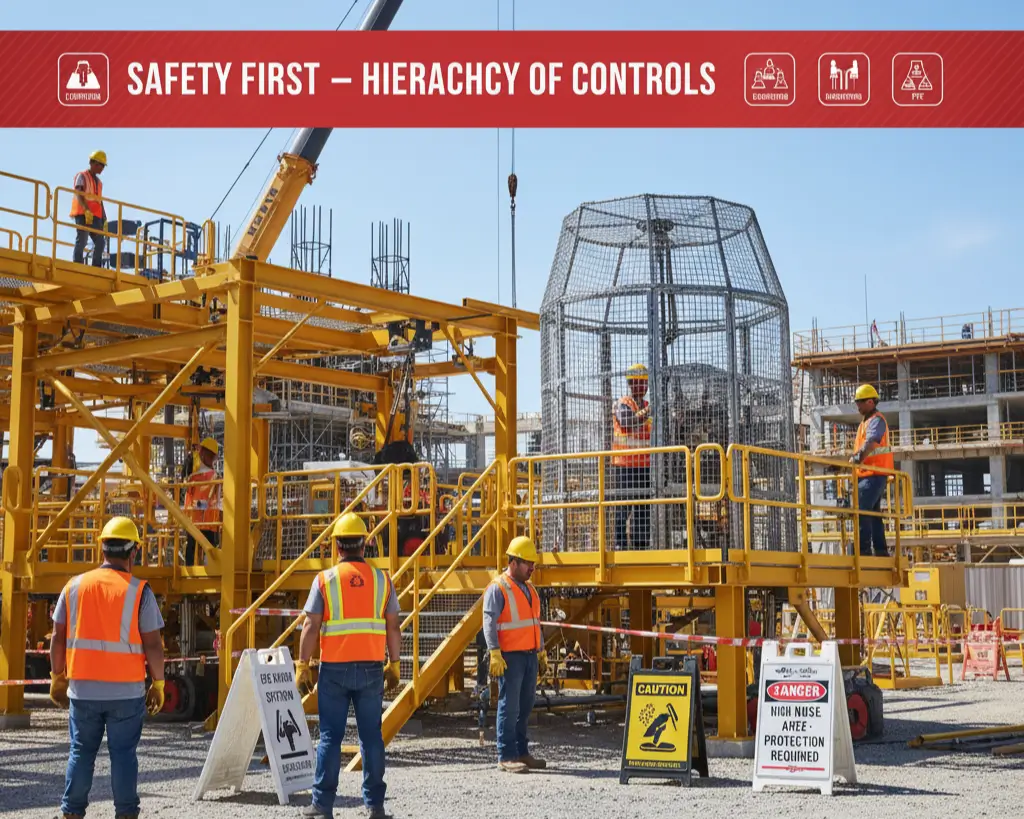
Safety controls in the context of occupational safety refer to practical and achievable measures that organizations can implement to address workplace hazards. These controls are not only effective in mitigating risks but are also realistic in terms of implementation, considering factors such as cost, technology, and operational constraints. Identifying and implementing the hierarchy of safety controls are essential for creating a safe working environment and adhereing with regulatory requirements. The key principle of the hierarchy is to prioritize controls at higher levels whenever possible. For instance, eliminating a hazard is generally more effective than relying on PPE. However, in some situations, a combination of control measures from different levels may be necessary to ensure comprehensive protection. Employers are encouraged to follow the hierarchy of safety controls to create a safer work environment and protect workers from potential risks and hazards. This approach not only minimizes the likelihood of workplace incidents but also fosters a culture of safety and risk prevention. The Hierarchy of Controls: A Systematic Approach to Workplace Safety The hierarchy of safety controls is a system for classifying and identifying the safety measures to keep employees safe and secure at their place of work. It is simply the structured framework employed in occupational health and safety to systematically address and manage workplace hazards. This hierarchy prioritizes control measures based on their effectiveness in minimizing or eliminating risks. The hierarchy serves as a guiding principle to encourage the implementation of the most effective control measures first, fostering a safer work environment and mitigating occupational risks. However, the primary levels include elimination or substitution, where the hazard is removed or replaced with a less harmful alternative; engineering controls, involving physical modifications to isolate workers from the hazard; administrative controls, which focus on changing work practices to reduce exposure; and personal protective equipment (PPE), the last line of defense when other measures are not feasible. Let’s have a look at the hierarchy of safety controls! Understanding the Hierarchy of Controls: A 5-Level Approach to Workplace Safety The hierarchy of safety controls consists of five levels, often depicted as a pyramid, with each level representing a different approach to risk management. The levels, from the most effective to the least, are elimination, substitution, engineering controls, administrative controls, and personal protective equipment (PPE). Elimination: The Most Effective Control Measure in the Hierarchy of Controls At the top of the hierarchy is the complete removal of the hazard. While this is not always possible, it is the most effective control measure. However, this process involves completely removing the hazard from the workplace. This could mean eliminating a particular process, substance, or activity that poses a risk to workers. Substitution: Replacing Hazards with Safer Alternatives When elimination is not feasible, substituting a hazardous substance or process with a less hazardous one is the next best option. This could involve replacing a toxic chemical with a safer alternative or using a less dangerous method. Engineering Controls: Isolating Workers from Hazards This level involves designing and implementing physical changes to the workplace or process to reduce or eliminate the hazard. Engineering controls are crucial for creating a safer work environment without relying on human behavior. This part’s major motive is to isolate workers from the hazard or remove the hazard from the workplace. Examples include installing machine guards, ventilation systems, or noise reduction measures. Administrative Controls: Modifying Work Practices to Reduce Risk Administrative controls focus on changing the way people work. This includes implementing policies, procedures, training, and work schedules to reduce exposure to hazards. While not as effective as elimination, substitution, or engineering controls, they play a significant role in enhancing overall safety. For instance, implementing work schedules to limit exposure time, conducting regular safety training, and establishing protocols for handling hazardous materials. Personal Protective Equipment (PPE): The Last Line of Defense Administrative controls focus on changing the way people work. This includes implementing policies, procedures, training, and work schedules to reduce exposure to hazards. While not as effective as elimination, substitution, or engineering controls, they play a significant role in enhancing overall safety. For instance, implementing work schedules to limit exposure time, conducting regular safety training, and establishing protocols for handling hazardous materials. Challenges in Implementing the Hierarchy of Controls: Overcoming Barriers to Workplace Safety Conducting Effective Risk Assessments: A Foundation for Workplace Safety Before implementing the hierarchy of controls, a thorough risk assessment must be conducted to identify and understand potential hazards. This assessment forms the foundation for designing an effective control strategy. Consider both acute and chronic risks, and involve employees in the process to gain valuable insights from those directly engaged in the work. Prioritizing Elimination and Substitution: The Cornerstones of Effective Hazard Control The first two levels of the hierarchy, elimination, and substitution, offer the most effective means of hazard control. Prioritize efforts to completely eliminate the hazard or substitute it with a less dangerous alternative. This proactive approach sets the stage for a safer work environment. Engineering Controls: Implementing Physical Solutions for Hazard Mitigation Engineering controls provide physical solutions to mitigate hazards. Invest in technologies and modifications that address risks at the source. Examples include installing machine guards, automated systems, or improved ventilation. These controls are reliable and do not rely solely on human behavior for effectiveness. Administrative Controls: Shaping Behavior and Promoting Safe Work Practices Administrative controls, such as policies, procedures, and training programs, play a vital role in shaping employee behavior. Develop clear and comprehensive guidelines for working safely. Ensure that training is regular, accessible, and tailored to the specific needs of each job role. Regularly review and update administrative controls to reflect changes in tasks or technology. The Importance of PPE: Protecting Workers as a Last Resort While PPE is the last line of defense, it remains a critical component of the Hierarchy of Controls. Ensure that employees have access to and properly use the necessary PPE for their specific tasks. Regular training on the correct use and maintenance of PPE should be conducted, and regular assessments should

Read More
What Does OSHA Stand For And How It Works?

What Does OSHA Stand For? (Secrets of How it Operates)

What is OSHA? In simple words, the Occupational Safety and Health Administration was established by the U.S. government and plays a critical role in ensuring the well-being and safety of employees across various industries. However, it has many complex functions and responsibilities. In this comprehensive guide, you will read what OSHA stands for, its purpose, how it works, and its significance in promoting and maintaining a safe work environment. OSHA has a far-reaching impact on employees and employees alike, making it a vital component of the American workforce. WHAT DOES OSHA STAND FOR? Wondering what OSHA means? In short, It stands for Occupational Safety and Health. Each word in the OSHA acronym holds a significant meaning when it comes to implementing the welfare of employees in the workplace: Occupational This term refers to anything related to one’s job or work. In the context of OSHA, it pertains to the conditions and environment in which employees carry out their job duties. Safety Safety involves the measures and precautions taken to protect individuals from harm, injury, or danger. OSHA focuses on the safety aspects of work to prevent accidents and health risks. Health In this context, it relates to the physical and mental well-being of workers. OSHA aims to safeguard employees’ health by addressing workplace factors that could affect their overall well-being. Administration The word “Administration” highlights the governmental nature of OSHA. It signifies that OSHA is a regulatory agency that oversees and enforces workplace safety and health regulations. WHAT IS THE PURPOSE OF OSHA? Its acronym suggests that OSHA was established with a clear and vital purpose, which is to make sure every worker has a safe and healthy working environment. The agency operates under the U.S. Department of Labor and has the following key objectives: Preventing Workplace Accidents OSHA develops and enforces safety and health standards that help prevent workplace accidents, injuries, and illnesses. These standards set boundaries for employers within which they must operate to create a safe working environment. Setting Standards When it comes to setting standards, OSHA takes into consideration the unique risks and working conditions of different industries. These standards cover a wide range of aspects, from the use of personal protective equipment to the handling of hazardous materials, with the aim of protecting workers Research and Data Collection OSHA conducts research and collects data on workplace safety and health, which helps in developing and updating regulations and standards to keep pace with changing technologies and industries. Training & Education OSHA provides training, outreach programs, and educational materials to help employers and workers understand safety regulations and best practices. These resources are often industry-specific and tailored to address the unique risks of different workplaces. OSHA also partners with third-party platforms to expand the reach and effectiveness of its outreach programs Enforcement OSHA has the authority to inspect workplaces and enforce adherence with safety and health regulations. Employers who fail to meet these standards may face penalties and fines. When OSHA inspectors find violations of safety and health regulations, they can issue citations and penalties to the employers. The severity of the penalties can vary, depending on the nature of the violation and its potential impact on worker safety. Empowering Workers OSHA ensures that workers have the right to voice their concerns about workplace safety without fear of retaliation. Workers can report unsafe conditions and request inspections. OSHA recognizes the importance of empowering workers to participate in maintaining workplace safety.  Employers are prohibited from retaliating against employees who exercise these rights. Decrease in Workplace Fatalities 0 % Decrease in Injuries and Illness at Worksites 0 % Inspections Carried Out In 2022 0 Average Savings on Worker’s Compensation for Business 0 % Unplanned Inspections of the Workplace 0 % HOW DOES OSHA WORK? The functioning of OSHA can be understood through the following key aspects: Regulations and Standards OSHA is responsible for developing and enforcing safety and health regulations and standards. These regulations cover a wide range of industries and workplaces, from construction sites to manufacturing facilities. They provide specific guidelines and requirements that employers must follow to protect their employees. Inspections These inspections may be initiated based on employee complaints, reports of severe injuries or illnesses, or as part of OSHA’s targeted inspection programs. Adherence Assistance OSHA provides guidance and assistance to employers to help them adhere with the regulations and standards. The agency offers resources, training, and consultation services to educate employers about their responsibilities and how to create a safe working environment. Partnerships and Alliances OSHA collaborates with educators, unions and businesses to promote workplace safety and health. These partnerships and alliances aim to leverage resources and expertise to improve safety outcomes. Data and Research OSHA collects data on workplace safety and health incidents and conducts research to identify emerging risks and hazards. This information helps inform the development and updating of regulations and standards. WHAT DOES OSHA STAND FOR IN MEDICAL TERMS? In the context of healthcare, OSHA stands for the “Occupational Safety and Health Act.” This Act, officially known as the Occupational Safety and Health Act of 1970, is a crucial piece of legislation in the United States that focuses on promoting safe and healthy working conditions for all workers, including those in the healthcare sector. The Occupational Safety and Health Act (OSHA) is designed to address a wide range of industries, but in healthcare, it has particular relevance and implications. The Act sets forth regulations, standards, and guidelines to protect healthcare workers and patients, as well as to make sure the overall safety of healthcare environments. PROTECTION OF HEALTHCARE WORKERS​ OSHA regulations and standards in healthcare help protect the healthcare workforce, which includes doctors, nurses, laboratory technicians, and support staff. These workers are often exposed to biological hazards (e.g., bloodborne pathogens), hazardous chemicals (e.g., cleaning agents), and ergonomic risks (e.g., patient handling) in the course of their duties. OSHA’s guidelines ensure that healthcare employers implement measures to minimize these risks. Patient Safety OSHA’s focus on healthcare safety extends to patients as well. Safe

Read More
What is the OSHA Hearing Conservation Program?

What is the OSHA Hearing Conservation Program?

The OSHA hearing conservation program is a vital framework designed to protect the hearing health of American workers. Employers must adhere to the program’s requirements, as outlined in 29 CFR 1910.95, to ensure a safe and productive workplace. Noise-induced hearing loss is a prevalent occupational hazard that affects millions of workers in the United States. To safeguard the hearing health of employees, the Occupational Safety and Health Administration (OSHA) has established the hearing conservation program. This comprehensive program outlines specific requirements and guidelines to protect workers from the harmful effects of excessive noise exposure in the workplace. In this article, you will delve into the key components of the OSHA’s hearing conservation program, its requirements, and why it is crucial for employers and employees. As employees, it’s important to be aware of your rights and responsibilities within the program. Access to information, proper training, and the use of hearing protection devices are essential elements of this program. Make sure to be proactive in advocating for your hearing health and the enforcement of the OSHA hearing conservation program in your workplace. Understanding the OSHA Hearing Conservation Program The OSHA hearing conservation program, as outlined in 29 CFR 1910.95, sets forth a set of regulations and best practices designed to prevent occupational hearing loss due to exposure to high levels of noise. This program is applicable to all employers whose workplaces generate noise levels equal to or exceeding an 8-hour time-weighted average (TWA) of 85 decibels (dB). OSHA has laid down specific guidelines for employers to implement a Hearing Conservation Program when noise levels in the workplace reach or exceed an 8-hour time-weighted average (TWA) of 85 decibels. Employers are responsible for evaluating noise levels, monitoring employees’ exposure, and providing appropriate protective measures. Requirement of the OSHA Hearing Conservation Programs There are some OSHA hearing conservation program requirements that are crucial to understand. So, without further ado, let’s delve into this read! 1. Noise Monitoring  Employers must regularly monitor noise levels in the workplace to assess the extent of exposure. This may involve using sound level meters or dosimeters. The data obtained from these measurements serves as a basis for determining the necessity of hearing protection. 2. Audiometric Testing  Employers need to offer audiometric testing to employees who are exposed to noise levels at or above an 8-hour TWA of 85 dB. Initial baseline audiograms should be established within six months of an employee’s first exposure to workplace noise, and subsequent annual tests are required 3. Hearing Protection  Employers must provide hearing protection devices, such as earplugs or earmuffs, to employees exposed to noise levels. Employees are mandated to wear these protective devices and should be trained on their proper use. If noise levels exceed OSHA’s permissible exposure limit, employers must provide hearing protection devices, such as earplugs or earmuffs, to affected employees. They are also responsible for ensuring that employees use these protective devices correctly. 4. Training and Education  It is essential for employers to provide hearing protection devices, such as earplugs or earmuffs, to employees exposed to noise levels. Employees are mandated to wear these protective devices and should be trained on their proper use. Workers must be educated on the risks of noise exposure, the importance of hearing protection, and the correct usage of protective devices. This training ensures that employees are aware of the hazards and are equipped to safeguard their hearing. 5. Record-Keeping  Employers must maintain records of noise exposure assessments, audiometric test results, and other relevant information. These records should be kept for a minimum of two years. However, employers are required to maintain records of noise exposure measurements, audiometric tests, and other relevant data for a specified period. This information is essential for tracking trends in noise exposure and evaluating the program’s effectiveness. 6. Hearing Conservation Signs Employers are required to post warning signs in areas where noise levels exceed the 8-hour TWA of 85 dB. These signs serve as a visual reminder to employees about the potential risks. Employees have the right to access records of their own noise exposure and audiometric test results. 7. Review and Evaluation  Employers must regularly assess the effectiveness of their hearing conservation program and make necessary adjustments to ensure its success. Additionally, make sure OSHA’s hearing conservation programshould be reviewed and updated regularly to reflect any changes in the workplace environment or the workforce. This evaluation ensures that the program remains effective in safeguarding employees’ hearing. What Is OSHA Hearing Conservation Program Fact Sheet? The OSHA hearing conservation program fact sheet serves as a concise reference guide for employers and employees. It summarizes the key elements of the program and provides a convenient overview of their responsibilities. This fact sheet is an essential tool for promoting awareness and understanding of the program within the workplace. It simplifies complex regulations and encourages adherence. This way, the workers are well-informed about the program’s requirements. Significance of the OSHA Hearing Conservation Program  The hearing conservation program achieves multiple objectives. However, the wellbeing and protection of the employees is at the center of it all. 1. Protecting Employee Health  The primary objective of the OSHA hearing conservation program is to prevent occupational hearing loss. Noise-induced hearing loss is irreversible, and by implementing this program, employers can significantly reduce the risk of employees suffering from this debilitating condition 2. Legal adherence  Failure to adhere with OSHA regulations, including the Hearing Conservation Program, can result in penalties and legal consequences for employers. adhereing with these requirements is not just a moral obligation but also a legal one. 3. Improved Workplace Productivity  Excessive noise can distract employees, leading to reduced productivity and increased stress. Implementing hearing conservation measures can create a quieter and more focused work environment, ultimately benefiting the organization. 4. Employee Morale  A safe and healthy work environment fosters a positive atmosphere and boosts employee morale. When workers know their employers are committed to their well-being, job satisfaction and loyalty tend to increase. Safety practices have profound impact on employee retention and

Read More
Unlock OSHA-Authorized Training Discount
Nearly There!

We have sent the email to your account. Please check your junk and spam folders.